
The Lives of Others
Florian Henckel von Donnersmarck puts a Stasi officer inside the walls of an East German playwright's apartment and makes the slow act of listening undo every certainty the man has built his life around.
What it is about
An East German surveillance officer is assigned to monitor a playwright and his partner.
The cost of listening
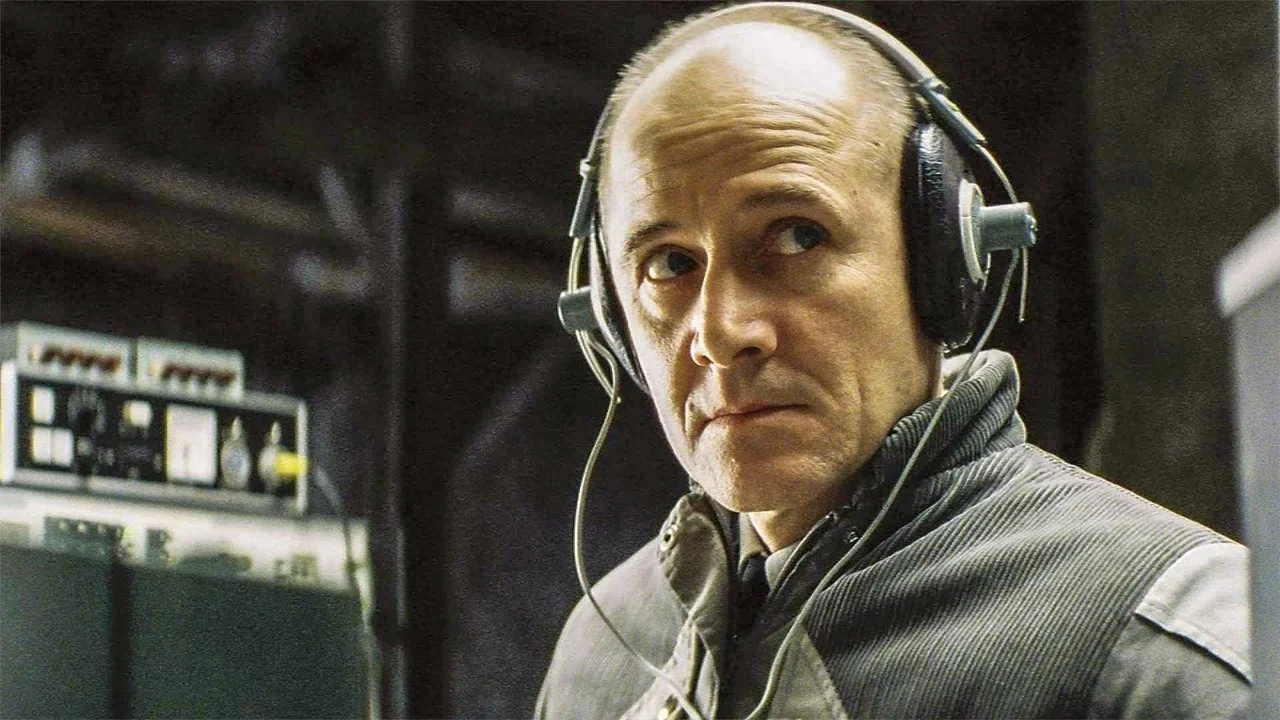
Ulrich Mühe plays Wiesler as a man who has suppressed every flicker of self until the act of listening to someone else's life begins to light him back up. You watch an ideologue becoming a person and you know it will cost him everything. It is one of the great performances in European cinema and he barely moves.
Von Donnersmarck structures the film around the paradox of intimacy through surveillance. The more Wiesler listens to the playwright's life the more he has to decide what kind of man he wants to be. That tension drives every scene without ever being stated aloud.
The final scene is earned in a way almost no film manages. It arrives without ceremony, without music, without announcement. The one line of dialogue Wiesler speaks lands because the film never told you it was coming.